Building a Scalable UX Research System
Virtusize is a B2B size-and-fit solution used by global fashion brands to help customers find the right size and reduce returns. The product integrates into client e-commerce sites to provide accurate, data-driven size recommendations.
The Problem
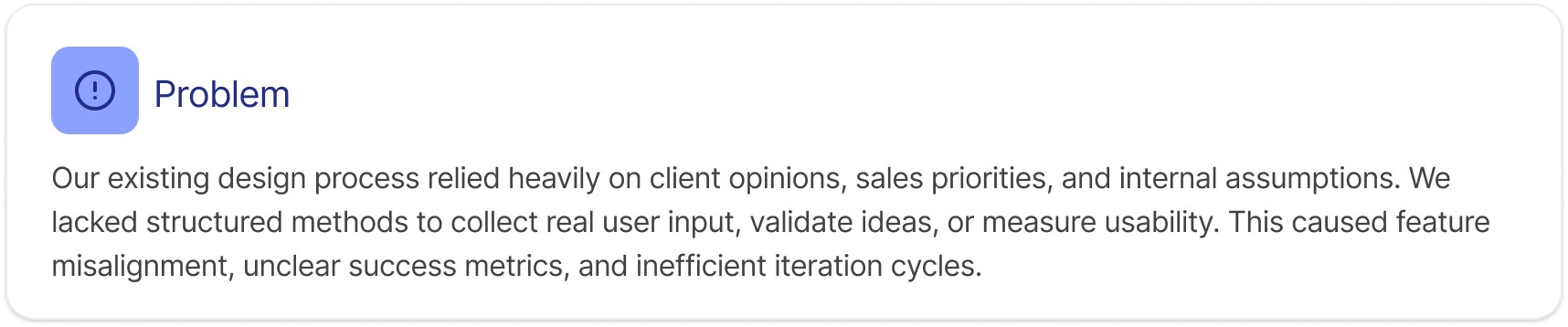
Before this project, Virtusize’s design and product decisions were driven almost entirely by client requests and internal stakeholder opinions. There was no structured UX research system, no centralized repository for insights, and no consistent approach to validating ideas with real users.
This led to:
Features being built based on assumptions, not user needs
Repeated design revisions due to unclear problem definitions
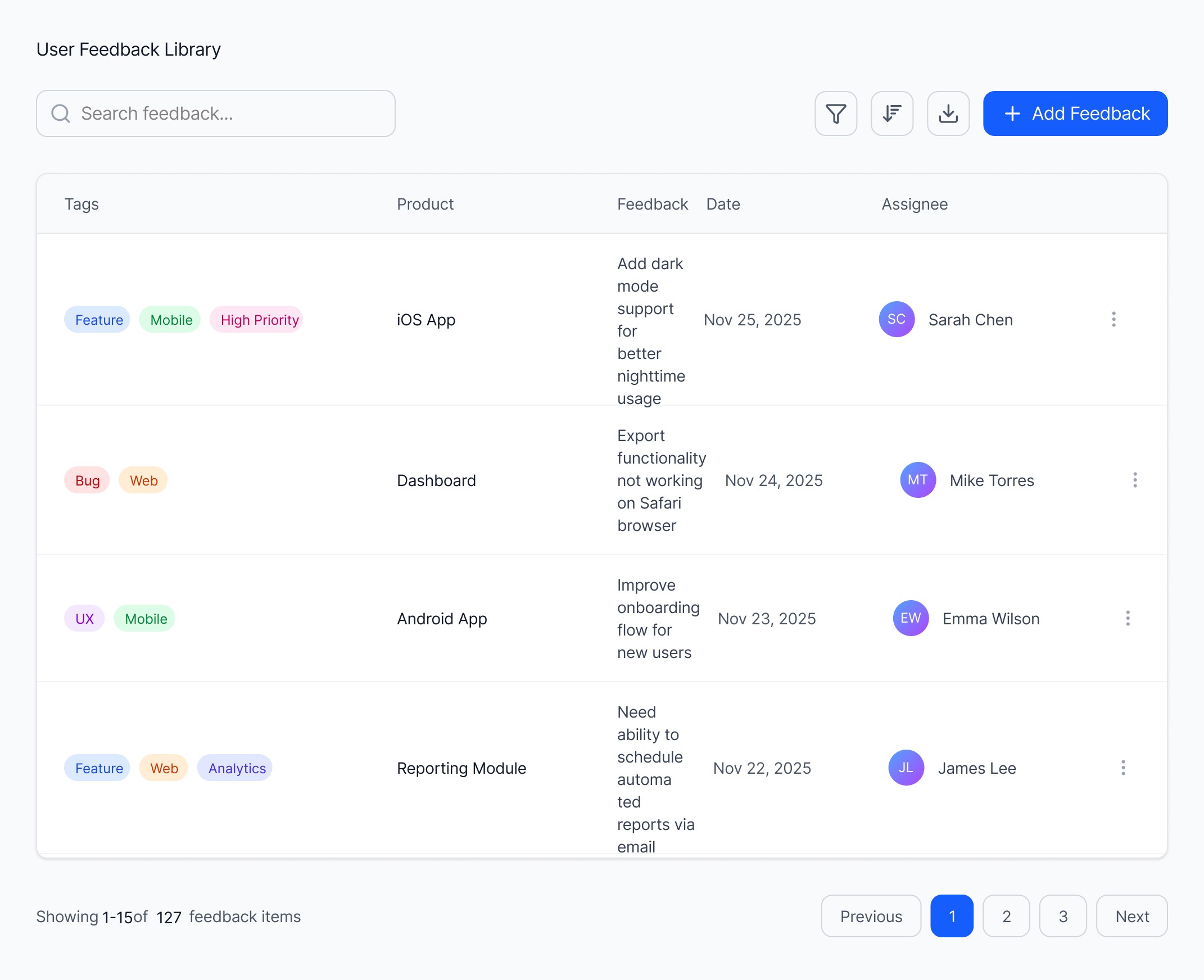
Fragmented insights stored across Slack, Notion, and emails
A lack of user voice influencing product decisions
The company needed a unified, scalable UX research system to support evidence-based design and ensure product decisions reflected real user behavior—not assumptions.
The Process
Since Virtusize lacked any formal UX research structure, I created a customized research process tailored to the company’s size, tools, and workflow.
My Process Included:
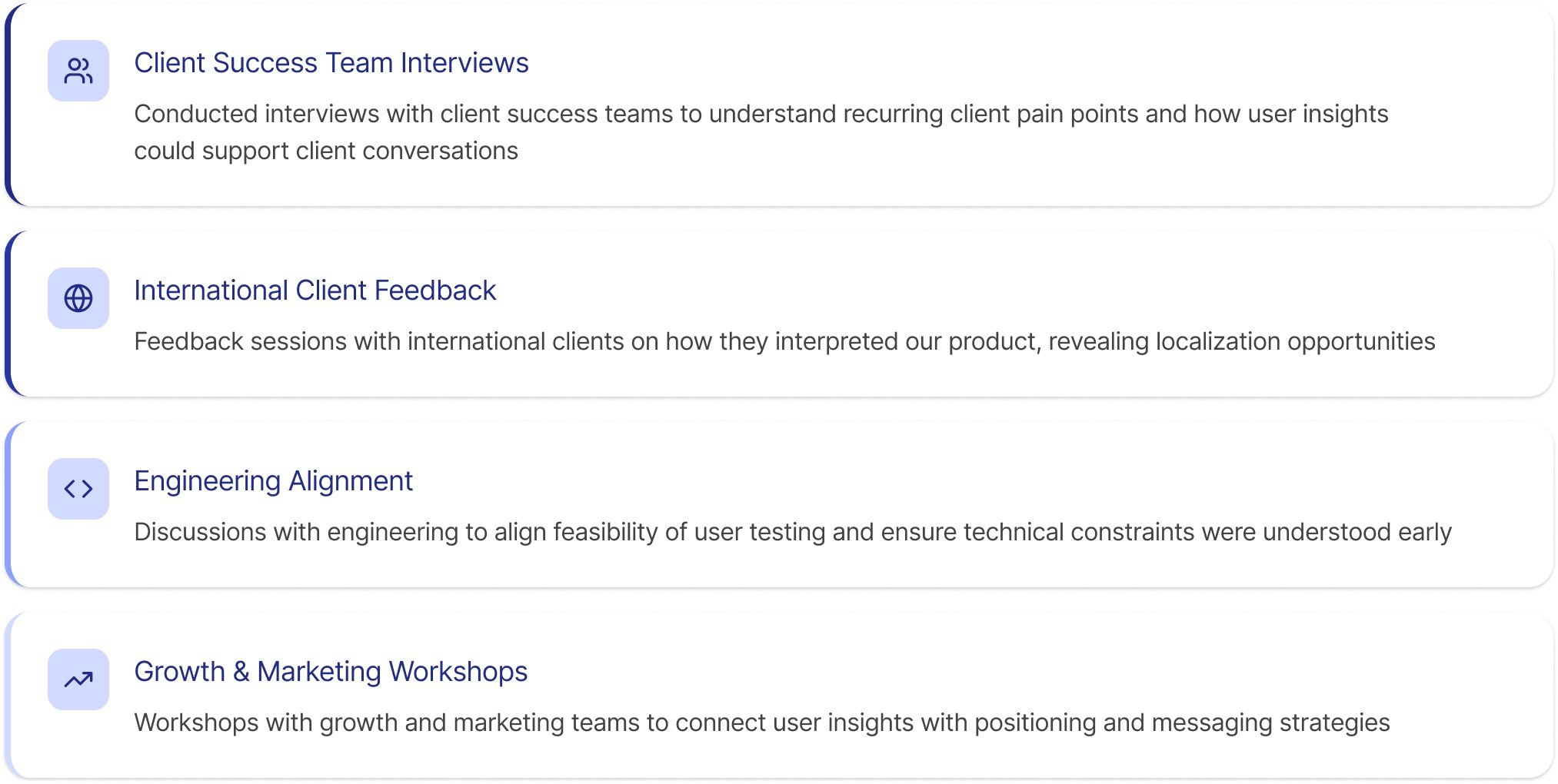
Identifying research gaps through interviews with PMs, designers, and CS
Defining goals for a scalable research system
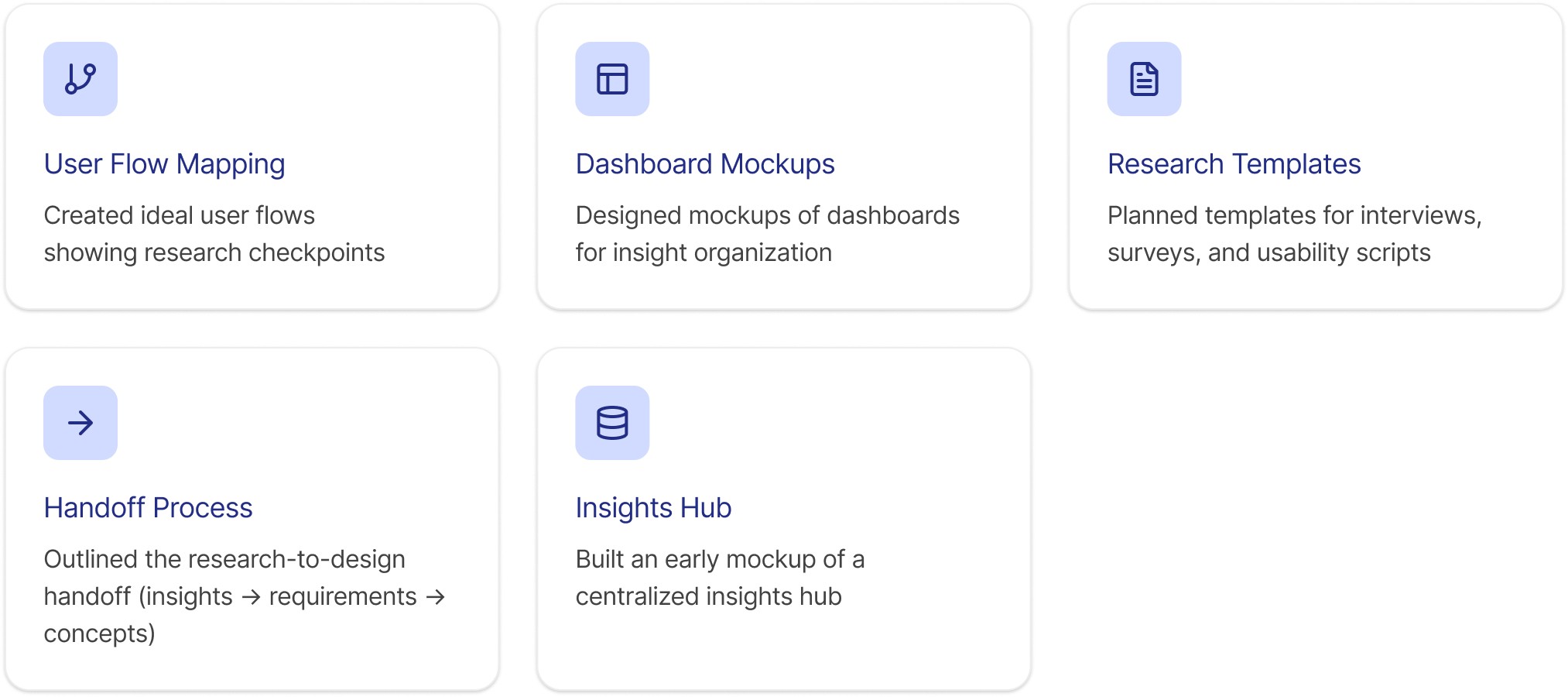
Creating a standardized research framework
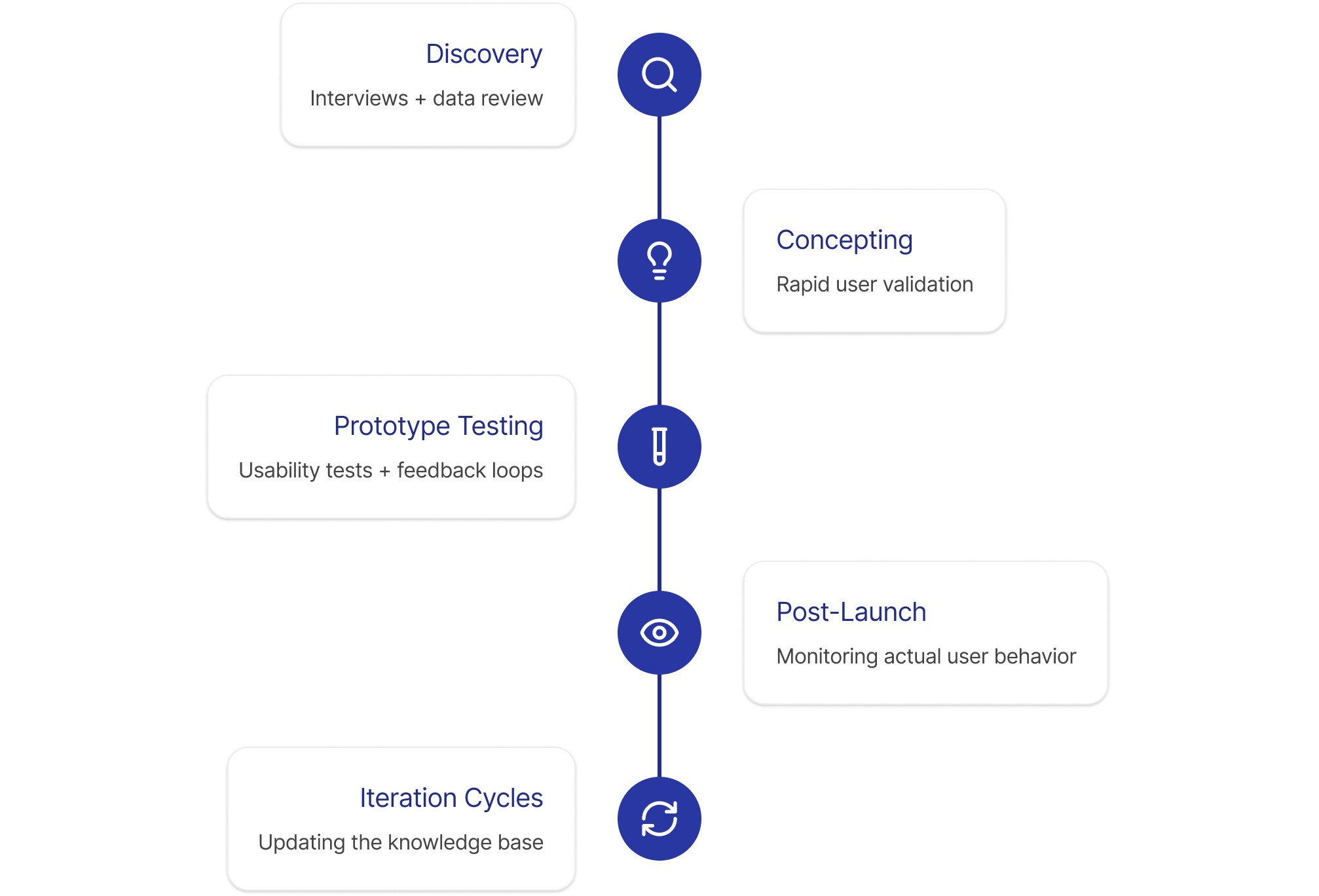
Establishing a repeatable workflow: planning → research → analysis → output → integration
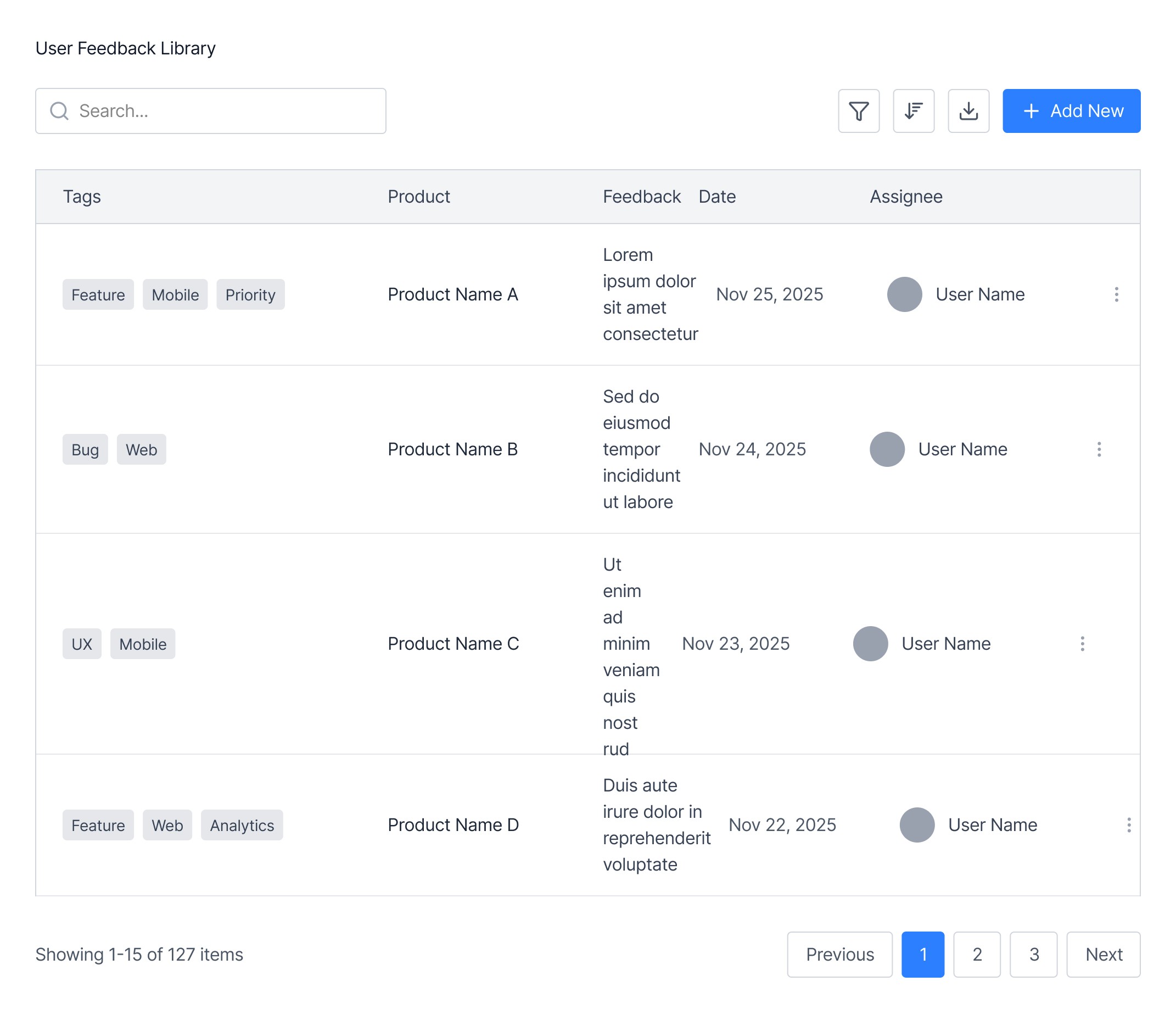
Building a centralized knowledge base for all insights
Rolling out the process internally through workshops and documentation
The goal was to create something that was repeatable, easy to follow, and valuable to every team.
The Research
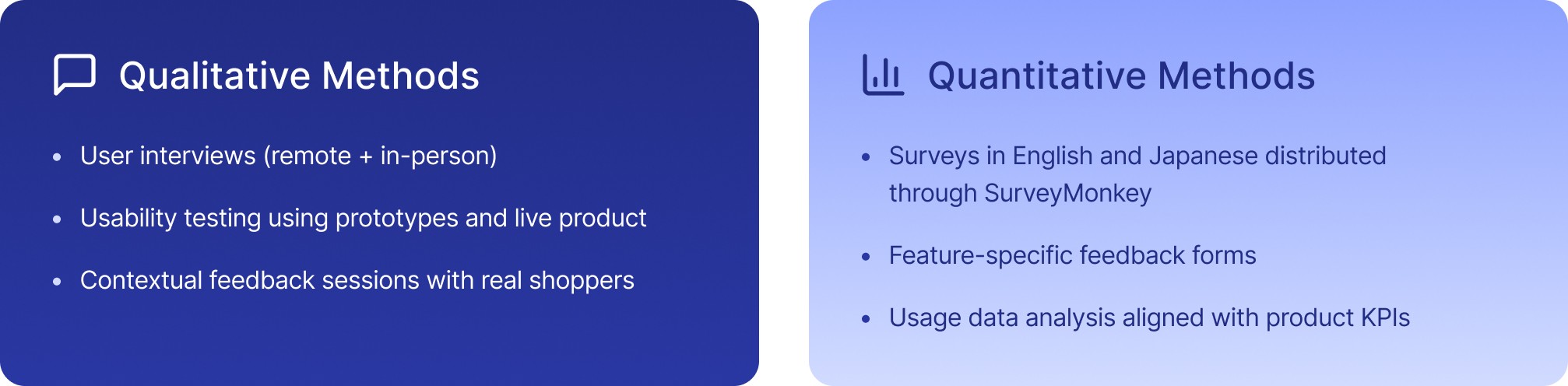
To understand what the new system needed, I conducted three key research methods:
Interviews: Spoke with internal teams and users to uncover gaps in both the product and our existing research approach.
Surveys (English & Japanese): Collected quantitative and qualitative data through SurveyMonkey to identify user behaviors and pain points.
Usability Tests: Ran video and in-person sessions with 10 participants to evaluate current flows and surface recurring issues.
Key Findings:
No single source of truth for insights
Repeated user issues were not documented
No standard process for when or how to conduct research
Insights lived in people’s heads, not shared tools
These findings confirmed the need for a formal, structured UX research system.